
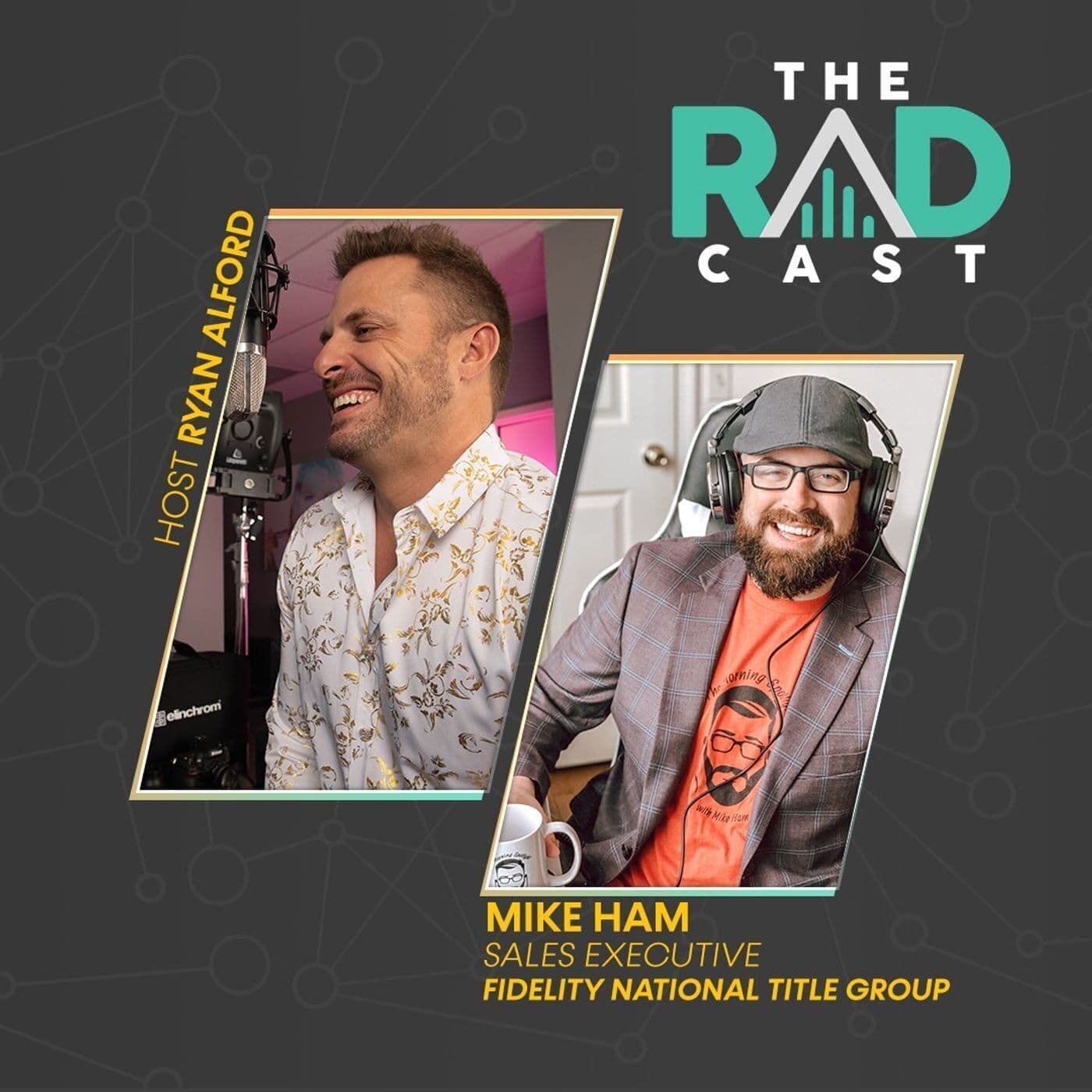
Ways to optimize your experience on the audio-based social media app Clubhouse, with host Ryan Alford and guest Mike Ham
Mike Ham joins Ryan Alford to break down Clubhouse rooms, hosting your own hour, paywalls ahead, and how a podcast turns cold intros warm.
- In a commodity service business like title insurance, where price and service are identical across companies, content and relationships are the only real differentiators.
- Mike's first attempt at video interviews failed because it was scripted and stiff - 60 episodes in 12 weeks with pre-written questions and answers - and only worked once he let his own personality lead.
- A podcast converts cold introductions into warm ones: after 45 minutes on your show, an industry veteran you couldn't have approached at an event becomes someone you can walk right up to.
- Instead of waiting to be pulled onstage in a 200-300 person Clubhouse room, host your own smaller room on a set schedule - Mike runs a 'podcast lunch hour' from 12 to 1 p.m. daily.
- Controlling the room makes you the expert even when you're not answering the questions, the same way hosting a podcast positions you as the authority.
- Mike gained roughly 80-100 Instagram followers and better podcast guests in a couple of weeks of active Clubhouse use, plus the Radcast booking itself came from the app.
- Get in and build your profile and following now, before Android access and paywalls change the dynamics and make it harder to reach people.
- Set hard boundaries with the app - Mike cuts off notifications around 5 to 8 p.m. because some users are in rooms from 6:45 a.m. until 2 a.m.
But now all of a sudden, the guy comes on the show because he wants to talk about whatever it is on my platform to my audience. And now I can walk up to him and now I just took a completely cold intro and made it probably more than warm.
But all of a sudden, if you become the guy that's like, you know, giving the platform to other people to come up and ask you questions and you're controlling the conversation, you know, all of a sudden, now you're an expert, right?
I do think what's interesting is it's essentially live podcasting, but you have a built-in audience.
You're listening to the radcast. If it's radical, we cover it. Here's your host, Ryan Alford. Hey guys, what's up? Welcome to the latest edition of the radcast. I hope everyone's having a happy and fast-flying January. It's been a whirlwind for us and I'm really excited to have our guests today. Mike Ham, welcome to the show. It's good to be here, Ryan. Thank you so much. This is really exciting. You guys are doing some great stuff and talking to Riley on Clubhouse. I know we're going to get into that and everything. But yeah, it's pumped to be here, man. Yeah, man. So Mike, you host the Morning Spotlight, which is like a fellow podcaster, a podcast on real estate sales, marketing, all of the above and your sales executive at Fidelity National Title Group. Did I cover everything
correct for you? Yeah, that's pretty much it. That is me in a nutshell right now. Yeah, sweet. So I have to ask, how's the as a fellow podcaster? I know we talked a little pre-episode about some of the evolutions. How's that gone? Have you been enjoying it? Yes. I mean, that is one thing that 2020 threw a lot of curveballs and a lot of bad things at us. But like a silver lining for me was finding out that like, hey, I actually really enjoy getting on a mic and talking to people from around the country. Recently, I did a couple, you know, I was a guest on a guy's podcast from Wales. I had a woman that lives in Costa Rica on my podcast. So
now it's basically like, we're international now, baby. Like we're worldwide. It's awesome. But that was one thing that I think came out of 2020. I'm super happy about that I like found that as a way to kind of get through the year and always a way to kind of help me market and network and and do some different things that once I get back into doing my like for work, and I'm sure we can talk about it if you want, you know, those in-person events again going out to lunch with people again, going out for drinks with people, being able to take this world, the virtual world, the podcasting world and couple it with that in-person frequent, you know, frequent in-person events, all that kind of stuff world. I think that's
going to be where I really start to kill it is because I'll have these two platforms that I can message out to people. I love it. So did you start the podcast? I mean, primarily, I mean, it's, you know, it's in your field, you know, title work, real estate, all of those things. I assume it was, you know, based on that. But I mean, what was the origination for the show? It was honestly, it was for networking and it was for something to do, honestly, because like I started, so I live in New Jersey in March, basically we went into super lockdown in middle of March and I just, I for work, so I sell title insurance. And my world is strictly built on relationships and service because it doesn't matter what
company you go to, you're going to get charged the same price for the same service. It doesn't matter, right? So I needed a way to try to differentiate myself, add some value, keep my name, my face out there. So then when those real estate transactions did start happening again, at some point in 2020, I was able to actually like, you know, people wouldn't forget who I was. So I started running some virtual networking events. We started them basically immediately. I was like, we just need to get out there. So we started on Tuesday nights at five o'clock. And we would run those weekly every Tuesday. We did it for 13 straight weeks. We'd get 35, 45 people every week in the real estate world, which was awesome. It was also super depressing
that we had to go for that long, but you know, whatever. We do them every, we do them biweekly now, which is, which is fine because it kind of people get zoomed out after a while and virtual networked out. I'm sure, you know, that and everybody knows that if they're listening to this. So, but I was posting about them about those events on LinkedIn because that's where most of my followers are and that's where like I've built up a good amount of people that follow me and my content. And what I noticed was I was getting like 1,500 views every time I would post about those events. So then I had heard from people that I know that are in the marketing world. I have no
background in marketing at all. I heard that that's a good way, a good way to get your message out there more is through video. So then I was like, why don't I start this little show where I take these people that I network with or clients or friends that have businesses and do like a five-minute interview. And like I was saying to you before we got started. It was very scripted. It was very stiff, you know, like I would write the questions out. I would give them to the to the guests and they would sometimes come in with like pre-written answers and would be like reading the stuff. And looking back at when it was like, I mean, this show is garbage, but it was a good way to kind of get my
feet wet with what eventually the podcast kind of became because once I went, I did 60 episodes over a 12-week span because I would record them, edit them, schedule them, re-record them in a lot of cases because people just weren't happy with what they were doing. And my personality wasn't really shining through and eventually it kind of just got to be too much and wasn't really fun for me anymore. So then I kind of transitioned it in July into what the show is now. So we got the merch. Obviously you have to have merch. You know, the my personality is kind of more out there. It's more conversational. Just kind of like leaning into who I am and how I go about my business normally. So I think a long-winded way to answer your question, that's how the show started and
that's where it is now. And that's kind of, I mean, I have so much fun doing it. It's awesome. I think you know at a lot of points when I talk to people, you know, with why we do the podcast and people are like, it's growing so much is it really is that opportunity to, you know, both talk to a lot of people, get comfortable speaking about your profession or otherwise, and just the content development. I mean, it's the Trojan Horse for us, you know, building content for the agency for what we do, being in digital advertising agency, you know, getting guests on and then doing other segments of different things like that, filming things, taking pictures, getting merchandise, everything that you talked about. It really can be the hub for content.
And just like we talk with clients at a time and like you noted, like saying, you know, video gets you more out there and all that, it's true. And in our business, what's so funny is how many agencies don't practice what they preach. And, you know, content is just so important now. And it's hard for an agency to find the time. We're doing it for our other clients all the time. So you have to carve out something natural and that's what it's become for us. So it's, I think that's a great learning lesson. We have a lot of people across the board listening to our podcast that are either well in their marketing career, just getting started or just getting started in their business career. And I think it's important to hear other perspectives for why and how,
you know, effective podcasting can be. Yeah. I mean, like for me, I mean, I'm sure it's a lot different in your world being in the marketing space and all that kind of stuff. But for me, like as a sales rep for a title insurance company, and I'm not sure how much you or your listeners know about title insurance, but it's at least here in New Jersey, it's a very old school industry. Like there's a lot of older people in it, which is, which is great. There's a lot of experience by fathers been working in the title insurance industry for 35 years. But there's like not a lot of people that are doing the stuff that I'm doing. So while it does take a lot to, for me at least,
to kind of do all the stuff that I'm doing, I'm like the only one, at least that I see for the most part, that does what I do. And it also doing this podcast world and adding like a different layer of value into, you know, the real estate world here in New Jersey. You know, because if, like I always look at it, you know, I was mentioned before, once we get back into those in-person events, like I'm really excited about how I can get somebody on the show that normally, if I was at an event, because I'm too new to the industry, I couldn't just like walk up to them and start talking to them because I'm not as experienced as them. I don't have the connections like they do.
And, you know, I would respect the fact that they're talking to three or four other people. I'm not going to butt into their conversation. But now all of a sudden, the guy comes on the show because he wants to talk about whatever it is on my platform to my audience. And now I can walk up to him and now I just took a completely cold intro and made it probably more than warm. We're probably hot now because we just talked for 45 minutes. Yeah. You've got to be the coolest guy in title insurance. I mean, I think so, right? I don't know if I look who has the hats, you know, like all that kind of stuff. You are definitely the coolest. I don't think I've
all, but the funny thing is, you know, in getting to know you pre episode and Raleigh telling me about you, like I was thinking about how many people I even know in title, you know, interns and sales and all that stuff. And like, I just don't know that many because I can only think of like one or two and they were not the cool factor that you have going on and they definitely weren't doing podcasting. Yeah. I mean, I pretty much knew people in title insurance my whole life. My dad worked from home for, you know, like recently he started to work from home a lot and I was living at home, you know, not too long ago. And I would always like, you know,
bust his chops and be like, you know, you sound like you have the most boring job in the history of jobs. Like, what do you even talk about in there? And I would like do his voice, you know, like, oh, like the least hold policy blah, blah, blah. But yeah, I mean, like now kind of being in the industry and granted like as far as, you know, subject matter in the real estate world, it's not the sexiest subject by any stretch of the imagination, but I have a lot of fun doing it. I like where I work. They kind of give me a lot of freedom. Obviously, like I'm doing this and I look like this to kind of do it the way that I want. And as long as I get to where I need to by
the end of the year, then they're, they're totally happy with that. So I, you know, I couldn't be happy with where I'm at. And I appreciate the coolness because, you know, everybody wants to be cool. They want to be a cool kid. Yeah. Well, I am, I do want to pause for a minute. And I do want to talk, you know, you and Riley met on Clubhouse. And I do want us to kind of get into a good talk about what that's doing to podcasting and hold the whole nature of it. But before we do, explain to everyone listening, because I think this could be like a little lesson. You give your synopsis just something exactly what title insurance is and what it does. I really, I think that would
actually be impactful for people because I think a lot of you won't even know what it is. Yeah. Sure. So I will give the quick and dirty version of title insurance. So title insurance, I mean, like you've heard of current insurance, life insurance, health insurance, all those kinds of insurances, title insurance is different in that it is the only insurance that you will pay a one time premium for anything that's happened in the past. When you think health insurance, current insurance, like I pay a monthly, you know, current insurance premium or six months, whatever you do, however you have it set up, that's where anything that happens in the future. Right. So it's like, you know, pre-pregnosticating something going wrong. Title insurance is different, like I said. It's a one time premium for anything that's happened
in the past. It doesn't matter if it's a residential transaction or a commercial transaction, you know, in real estate, you know, like to say that there's like a lean on the property, you know, there is an easement through your backyard or in some cases, like extreme cases, there's, you know, examples of fraud, right, where like the guy selling you his house doesn't actually own it. And, you know, then you buy it and next thing you know, like you don't have a rightful ownership to that property. So what we do is we kind of go through, we search all the county records and it differs from state to state, you know, like a total process, but it's very similar, you know, no matter where you go. We go through, we search all the records in the county
records offices, you know, literally here in New Jersey, pulled books off a shelf, take photo copies and then send it over to us. We put together a policy that covers you in the event that anything that's happened, you know, because like let's say you bought a house and you didn't realize that there was a lean on that property, you take ownership of that house, the lean doesn't follow the guy that just told you the house. It's now on you to take care of that. So what we make sure that all that kind of stuff is, you know, gone and like taken care of before you actually, you know, move in and it just protects that investment. So, you know, that's essentially the very quick and dirty version of what title insurance is, you know, obviously there's a lot more to it and a
lot more different, you know, all different kinds of endorsements and different things that it can cover, but that is the basic. And a lot of that's based on, you know, a home is for most people, the most valuable thing you purchase and the expense there. There's, you know, if you're buying, you mean a car, you have insurance certain things, but like just less valuable, when you have hundreds and millions of dollars involved, it's just making sure that that your ass is covered when you make that purchase. Like I'm buying this house and when I pay it off, whether it's 15 years from now, 30 years from now or never, it will be mine and free and clear. Right. Yeah, yeah. I mean, there's so many different things, you know, like with, you know, like whether it's a survey,
right? Like so you think that the property goes to a certain, you know, spot and you're like, wow, I have a huge backyard. And this is, you know, like an extreme example, obviously, but next thing, you know, you move in that you, they do the survey after the fact and you actually only own like the size of my desk right now, which is like two feet, right? You know, you have no idea unless you actually go through and do that whole process. So it's, you know, it's like if you're a family or a person buying a house, it's a huge investment, right? Like that's where you're going to raise your family. You want to make sure that what you're buying is what's actually, you know, you think you're
buying, if that makes sense. Yeah. And then if, you know, on a commercial end, which I do a lot of commercial work here in New Jersey, you know, some of these people are investing like, you know, tens, hundreds, millions of dollars in some of these properties, whether it's like a refinance or a purchase or whatever. And, you know, it's like you want to make sure that if you're spending that much money, that you better be getting what you expect things. So I will never forget growing up as a kid. And I'm going to someone in my family is going to listen to this episode, remind me of a detail that I'm forgetting. But it had something to do with where we lived, our house growing up
in our neighbors. And we'd live there for like 10 years or more. And somewhere along the way, our neighbor came in and was tried to make a stink over our fence being like eight inches in their property. Yeah. And you've probably heard these stories. It's probably like lines right up with it. And I just at the time and even to this day, like I understood, hey, it's their property I understood it, but at the same time, but at the same time, I was growing up as a kid going, well, why is he do it, you know, like, but it was sure enough. And they made hell over that. Like, it was like, and I, you know, I guess now looking at it as an adult thinking about it, it's a big deal,
but I don't know how you rectify certain things like that. When someone's made an investment on something based on, you know, whatever paperwork there was at the time, or even before my parents bought the house, that fence was there. You know, and I, it ended up being worked out somehow. But, you know, yeah, there's so many different examples of that. And there was actually like, I forget the term. I think it's like adverse use. So if you've used something for like 30 years, it's again, it's different from state to state, but here in New Jersey, it's like, if you've used something for so long and done something a certain way for so long, then like almost like by, you know, association, like you just have ownership of the maybe that, like where the fence was.
If that fence was there forever, and next thing, you know, like everybody that's lived in that house is used that fence right there the whole time, you know, then it could, you know, change ownership or whatever. But yeah, man, it's, it's like, it's super technical. And like a lot of times, like what's really interesting, at least, you know, in my opinion, is like when you, when I watch some of our underwriters actually put some of these policies together, like they're looking at documents that are like handwritten in old English from like the 1800, really 1900, it's ridiculous. And like they're, they're going through and trying to like read this stuff. But I was like, how do you do this? But it's just like, it's like a history lesson on your property. And you know,
it's just I don't know how they, how many eyepieces are in your office? Yeah, right. Like goggles. You know, just like the natural, national treasure movies, like, you know, going through artifacts. Yeah, I've got to use the goonies treasure piece to align these things up to read the code. And then on the back of the declaration of independence, the actual like code of like what, you know, these things actually mean. It's, yeah, it's stuff like that. Yeah, Robert E. Lee, uh, it's just valid. This is one of the Confederacy. This is not valid. I watch, uh, I'm going to, you know, both uh, make people laugh or cry. I'm not sure. I watch, but we watch old episodes of The Andy Griffith Show, which is an old, uh, old show. And they were an episode the other night
was on. It was about a deed. Someone had thought they would become a millionaire. And it was, they had old Confederacy money that wasn't worth shit. So anyway, but how many times do you ever, do you, you guys ever had to be bearer of bad news? Like, you go, you know, someone's buying something or they think they own something and you guys uncover something. And it's like, is, do you guys ever have to like break the news to someone? Um, from Maya, no, I mean, basically like what it really comes down to is making sure that like, you know, the person buying it knows what they're getting. Um, you know, there's, there's like, there's Patriot Act searches to make sure that like if you're, you know, like a,
on the Patriot Act list or however that worked that you can actually buy property in the United States. So there's, there's that kind of stuff. Um, you know, but for the most part, like, it's not necessarily a bearer of bad news type thing. Like you can't buy this property. It's just making sure that like the people that are buying it because as long as like everything that, if it's a reputable title company that did this stuff beforehand. Yeah. And your name's on the D and everything was recorded the right way by the county. You really shouldn't run into any of those issues. It's really just kind of comes down to, you know, uh, like making sure that the, that what you're getting is what you're, uh, you're, uh, you're expecting to get. So there's
really no like bearer of bad news type stuff. Um, or finding out that there's hidden treasures buried in your backyard. Yeah. Yeah. Just trying to catch those issues beforehand. Um, so that like, you know, then you can make an informed decision on what you want to do moving forward. And and people have walked away from deals, you know, whether it's at the closing table, if they see something on there that they don't like or even beforehand, if they see something where they're like, wow, I didn't realize this was part of, you know, whatever it is. Like, you know, there's this lean on this property that can't be, you know, uh, taken out by the bank or whatever it is. Um, and I just like don't want to get involved and they'll walk away, which sucks
for me because then I lose money because it's a commission for me. Um, but, you know, it is what it is. You know, that's the nature of the beast. Yeah. What do you do? Yeah. So let's transition. So the the phenom and the, uh, the latest buzz and in call it social media, uh, uh, is become clubhouse. Uh, I got to invite a couple of months back and got on. I've definitely been more of the voyeur. Uh, I've definitely gotten on stage a few times and we're looking at some trials and everything's with the podcast, but it's a really fascinating platform. I know you're pretty, got pretty engaged on on this where Riley and you talked to me. What's your thoughts and what's been your experience with clubhouse? Uh, time suck for sure. Yeah. I'm glad you said it. Yeah.
It's incredible because like, I spend, so I got on there, I mean, maybe like two or three weeks ago, I forget now because now all my days, my days during COVID have all been blended together and adding in clubhouse. It's just, I mean, I don't even know where the days go anymore, but, um, I got on maybe like two or three weeks ago and like the first room that I really got involved with because I would like, you know, jump in and kind of listen. I was like, what is this thing? I couldn't really figure it out. And then one Sunday, my girlfriend's a nurse and sometimes she works weekends. Um, so she was at the hospital working. I was home. It was a Sunday morning.
I spent three and a half hours on clubhouse because somehow I got up onto the stage, somehow I got made a moderator and people are asking me questions about a podcast and I'm like, you know that I'm not anywhere near an expert, right? The morning spotlight is not like this juggernaut of podcasting, you know, start them. It's just like, it is what it is, but I was, you know, talking and I, that was like my first real taste of, of being in it. Um, and then, you know, as I kind of progressed, I saw like a lot and I'm sure we'll get all into it, but I saw just like a lot of different opportunities where, you know, I can be a guest on a show because
like right now I'm here on the red cast and that became because of clubhouse, right? I've gotten guests. I, I, you know, hopefully working on maybe trying to get some clients through clubhouse too much. Once I start really trying to hone in on doing some real estate focus rooms and all that kind of stuff, but there's a lot of stuff to weed through. Like there's a lot of crap on there. Um, and a lot of like snake oil salesman for sure. Um, and everybody's trying to like pitch their stuff a lot of times. But if you find the right rooms and the right people, I mean, to me, it is like the best thing going right now. Like I ran one of those virtual networking events
last night and had, you know, a few invites extra that I had just like in my clubhouse account. Yeah. Um, and a couple of people were asking about it and I was like, Oh, here, just jump on and was just, you know, promoting clubhouse as much as I could because I just think that right now, it's the best thing going and it's, you know, as long as you have an invite and you get on, there's very low barrier to entry. There's no paywalls. There's no, none of that stuff. And it's just a very open format. But once they start getting, you know, other, you know, different, not iOS users, like whether it's an Android user or whatever else, once they start coming in, once they actually start implementing some paywall stuff, I'm sure it's going to change the
landscape. But right now I spend way too much time on there. Yes. That's been the biggest thing for me is I see the value and I appreciate the knowledge and you can find some really rich information. I just can't, um, have not found as much time as I want to spend because for me, at this stage for us, you know, I would want to be both engaging with people with peers and sharing knowledge. But you kind of have to wait in line to kind of get up in the room, you know, right? And like sometimes I have like 10 minute increments and like it happens, it's happened to me a couple of few times where I'm in there and they see me, if someone reads my
profile and they usually will bring me up, if it's related to a topic, like a marketing topic, you know, I'll get brought up. But it's usually like by the time I'm coming to the end of how much time I had to spend, you know, like, I really appreciate it guys, but I gotta go. And uh, but I see the value of it. I just haven't quite negotiated how to get the most out of it from, uh, from a time spend. Yeah. So like what I the same way, um, because like, I mean, I know people on there and Riley's been in rooms with them before, um, that like, they're literally on there from, so, you know, we're both East Coast time. So like 6.45 a.m. to sometimes like two o'clock in the morning,
they go to bed for four hours, they get back up and they're back on clubhouse doing like a morning chat. It's like, what are you guys doing? Like how, how are you on here that much? Like I'm not that crazy with it. Like I usually cut it off, like depending on the day, you know, like five o'clock, eight o'clock p.m. That's usually what I'm done. I turn the notifications off. I'm like, I can't do any more on clubhouse. But one of the things that I have been doing is I'm making sure that I, I just set aside an hour a day, right? So like, I take an hour a day, I do a podcast lunch hour, right? So I just do like 12 to 1 p.m. and just host a room and, you know, like one of the things where
it's like hard to get your voice out there, especially like in some of those bigger rooms where there's so many people, everybody's trying to get on stage because they just want their numbers to go up. That's tough because there's, you know, there's a 200, 300 people, sometimes more in those rooms. Yeah. But all of a sudden, if you become the guy that's like, you know, giving the platform to other people to come up and ask you questions and you're controlling the conversation, you know, all of a sudden, now you're an expert, right? Even if you're not the one that's answering the question, you're the one that set the room up, you're the one that's in control. It really, it's like, it's like doing a podcast, right? I mean, you can, you know, be like the, the most
experienced, most knowledgeable title professional in the world, but sometimes it's hard to get your message out. You can be the most experienced, most knowledgeable marketing professional in the world, but all of a sudden, now you're controlling the conversation because you have a podcast, you're having people on, you're talking about the stuff that you want to talk about and it makes everybody sound good, right? So that's what I've been doing and I just noticed like, you know, through Instagram, my numbers, I think I got like so far in the couple weeks that I've actually been active on there. I think my Instagram following has gone up by like 100 people, maybe like 80 to 100 people. I think like, you know, just my overall engagement has been a lot better. I'm,
you know, guessing on shows, I'm having, finding better guests for my shows. I'm learning so much more about running a podcast. I mean, that's, that's been great. So there's just so many, so many benefits from it. But yeah, I mean, it's sometimes hard to carve out those hours of the day. Luckily, I have a fairly flexible schedule, you know, and I work from home so it's, you know, I can kind of do my stuff at my leisure. But yeah, it's, it's tough to find that that time. I do think what's interesting is it's essentially live podcasting, but you have a built-in audience. You know, like, so you don't have, not even just a built-in audience, it did an interactive audience. Yeah. It builds in live audience and live interactive audience, which is kind of the brilliance of it all.
You, you know, the hardest part of podcasting is building an audience and or one of there's a lot of that would put that up there. And you with clubhouse, like you said, you get on and as long as you're willing to interact and engage, you know, you have that built-in interaction and audience that's there. And as long as you are single, have no kids and, you know, plenty of time. No responsibilities and a job that lets you listen eight hours a day. It can work for you. No, it has value for that. I think it is just carbon. It's, but for me, I'm a habits and behavior. Like, you know, it's not that you can, I'm not a set your clock by my day guy because sometimes it
varies. But it's like, it takes a little moment, like I've been on there for a couple of months. By next month, I'll have carved out some amount of time that is either daily or weekly in changing my behavior. You know, like I spend a lot of time on Instagram. I have a good following there and and LinkedIn, which is our business and stuff, like some natural things. And even those, I mean, on Instagram for 10 years, but they didn't always come immediate for me. You know, I've got to like work it into the platform. You know, right. Yeah, yeah, I get you. Yeah, I mean, it's just like one of those things where like I'm constantly because I have like, so I was a guest on one of my friend's podcasts, who she's in marketing. This is going back, you know,
maybe a couple of months. And she was talking on the show about how, you know, like I have such a great marketing plan, right? But like, I don't, like I think that's so flattering because I am the king of like taking stuff, throwing it against the wall and seeing what sticks. And that's just like this clubhouse has been one of those things. So like Instagram has been the same way. LinkedIn has been very similar. Clubhouse is just an extension of those of those platforms and just trying to make sure that I'm figuring out ways that I can get my message out for the show, which ultimately is to try to lead business to me. You know, so yeah, I mean clubhouse has just kind of been like, I'm just
trying to figure it out. And like I've always just been the kind of person where if I'm going to do something, I'm just going to like jump into it, right? I'm not going to have any kind of plan, which is, you know, both a strength and a serious fall for myself. You know, that's what the show was. I mean, I had no plan going in. I wish I started the podcast now because I would learn so much more about, you know, running a show and audio equipment and whatever, like I just bought this mic and this camera and this headset. And I was like, okay, let's start a show. And but yeah, I mean, there's just a lot of value there. And it's, I think like that's been, it's hard to get
off of it for me because like I do have such kind of like a fluid schedule. And just like my mindset is just kind of I get distracted easily and just jump into something I could sit there on clubhouse and just listen for hours. Like you said, but having a plan for sure going in is key. Where do you think, you know, they're showing hints of it, different things. And Raleigh shared an article with me that I hadn't seen where Twitter is actually trialing a similar service called Spaces that, you know, I can't help but think was brought about from what they've seen with Clubhouse. But I mean, where do you see this, the platform going?
So, I mean, this is just like a, you know, my thought process on it. I think that eventually we're going to get to a point where it's going to be like there's going to be more paywalls for some of those bigger rooms and some of those bigger because like there's people that gained like, you know, 10,000 followers, which is a lot for Clubhouse in like a week or two weeks, whatever it is. It just seems like everything is just so accelerated right now. And, you know, there's from just like a purely the way the platform works. I think that there's going to be a lot of changes kind of as we go, which is why I think that like right now, like if you haven't gotten
onto Clubhouse and you have the ability to, I think now is the time to try to get in there and start working on, you know, your profile and your following and all that kind of stuff, because once they start opening up to other platform users and, you know, putting those paywalls in, it's going to be a lot harder to get your message out and get in front of people to talk to. You know, so I think that there's, because I think, I think they went in and we're looking for like, I mean, I don't know if I'm saying this right, but like a billion dollars funding or valuation or whatever, because it's just like, I mean, it is the thing right now. And if you're not on it
right now, like you're going to, it's going to be harder for you to kind of, you know, develop the type of, you know, network that maybe I have, like I have, I don't know, like maybe 300 followers on there, which is not many, but I'm happy with what I have and what I've kind of been building, because I just, I can't just physically and like mentally cannot extend myself across all these platforms and also work, you know, all the time. So I think that like just doing stuff like that, I think is, you know, this is the time to get in on it, because I think that the way that the proud platform operates is going to change quite a bit as we move forward. Yeah, is,
yeah, I can't figure out how, you know, the invites, like I use a few, they give me a few more as far as that. So yeah, it's getting pretty open, even in just the like the last month, it feels like it's getting more accessible. I know it's still all iOS, but you know, it feels like it's getting there. I don't know what the critical mass will be, but it's got to be opening up, because like some even like obscure friends that I have that I, not because I wouldn't think they'd be cool enough, but just because like I never would have thought they'd be on there, just because of maybe interest level, I'm getting like these notifications, and I'm like, okay, we're getting to, we're getting to some some mass here, at least with iOS.
Yeah, I said in a friend of mine does like mergers and acquisitions and stuff like that, and he told me that he was running a room this morning at 9 a.m. So he was like, do you think you can come on and just sit in the room? Like maybe we could bring you up and ask me a question, like a softball question. I was like, sure, so I'm sitting in there and they're doing, I had moderated a room for him before, and there was this one guy who I think is like 78 years old and he's just on there just talking because basically like a conference call and people like that, you know, like they're in that mindset of being on a conference call and answering questions and you know,
talking in that kind of environment. It's like, it's such a cool platform because it's so personal because you can hear somebody's voice and you can't just like DM them or whatever. You could go through their Instagram and that way, but you have, I mean, ultimately you have to actually talk to them, you know, like that's how Riley and I started talking because, you know, I, she was on one of the rooms that I had, then I just did like a private room with her just to kind of talk about, you know, you coming on the morning spotlight and we talked about becoming on the Radcast, and it was just, it was perfect because it was just an easy way just to kind of chat real quick,
get it done and then kind of go from there. So, um, yeah, that's, that's, that's what I got. No, I think, uh, I think if you are in any way, shape or form, starting a company, whether it's, you've got an idea or you're starting something that you're going to need capital on, you know, it's an amazing platform for those things, not that it's not for any networking, no matter what you're doing, but there's just so the richness of the people that are on there. I mean, I think Grant Cardone who's hocking, I think his, his TV show more than anything, but dude has been on there a lot like I get notifications. I mean, he's on there as much as anyone. I'm like, damn, he's a billionaire and I know he's on billionaire undercover or something a discovery show,
but he's been all over it. I'll go into like three different rooms and he's like in two of them. Right. You see like a lot of people like that. I mean, I see like Gary Vee in rooms all the time. You know, I see Grant Cardone obviously all the time. You know, there's just like, it's just a platform that's just so, you know, it's just you can, it breaks down a lot of barriers between you and those people that you don't think you can talk to, whether it's people that, you know, maybe are, like on the same level as me that I otherwise would know whether they're from across the country, whether they're, you know, big name people like that. It's just a good interesting platform and
everybody's trying to get on the train and figure out how they can utilize this to make money for themselves. And that's what, that's what ultimately we're trying to do with all these platforms, right, is try to figure out how, you know, I can monetize it or how you can monetize it or how Grant Cardone can. And he's using it to try to drive people to his show, obviously, you know, and I'm using it just to try to like learn and try to grow my network a little bit and hopefully maybe drive some people to my show and maybe one day find a client on there. I know people have, like the room that I was in this morning, like I was mentioned to you, the guy that was running the
room, he's like a multi-millionaire and he told my friend that he's, you know, gotten work through this platform, like through Clubhouse, he's made like, you know, like a million dollars or some crazy number. And it was like, how is that possible? I feel like it's only been around for a month, I mean, I know it's been around for a long time than that, but yeah, I've only started hearing about it recently. So, hello, man. Well, Mike, I really appreciate you coming on the Radcast. Working, you know, everybody keep up with you, the podcast, the Morning Spotlight, and what's your handle on Clubhouse? Let's let's everybody where to keep up with everything's going on with you. Yeah, awesome. So, the Clubhouse handle is at TM Spotlight, so that's just short for the Morning
Spotlight. So TM Spotlight, I'm on Instagram as the Morning Spotlight at the Morning Spotlight, and LinkedIn is probably the best place to get me because that's where I spend most of my time. The LinkedIn and Instagram are usually the platforms that I'm on the most. And then the podcast itself is literally, you know, YouTube's Apple Podcasts Spotify, wherever you consume your podcast content, the Morning Spotlight should be there. And if somehow we're not, then let me know because I'll get it there. So, sweet. Well, I look forward to running to you on the Clubhouse and to coming on the Morning Spotlight here in a couple months in the next little while, but I really appreciate you come on, Mike, and learning more than I ever knew about title insurance. I knew enough to be,
like, generally what it was, but I can think I could pass the secondary test now if I got it, maybe. Yeah, no problem. I'm happy that I was able to provide some value there. And then talk about Clubhouse, which is just the thing that I just have been, feel like I've been talking about it so much, pumped to have you on the Radcast. And hopefully I can, you know, take it to the next level. I gotta outdo you now. This was awesome. So now I have to take it to the next level, make sure that my episode with you is even better than that. So, hey, man, no, my pleasure. Well, everyone really appreciate Mike coming on. You know where to find us. We're at the Radcast.com. I'm at Ryan
Offer on Instagram and at the.rad.cast on Instagram for the Radcast podcast. We'll see you next time. Yo, guys. What's up, Ryan Offer here. Thanks so much for listening. Really appreciate it. Do us a favor. If you've been enjoying the Radcast, you need to share the word with a friend or anyone else. We really appreciate it. And go leave us a review at Apple or Spotify. Do us a solid tell more people, leave us some reviews. And hey, here's the best these of all. If you want to work with me directly, you want to get your business kicking ass. And you want radical or myself involved, you can text me directly at 864. 729-3680. Don't wait another minute. Let's get your business going. 864-729-3680. We'll see you next time.

The End of Traditional SEO: Getting Found in the AI Era
Jason Kocina joins Ryan Alford to explain how businesses stay visible as search shifts to AI answers, and why messaging still beats every channel.
Mitch Matthews on Turning Expertise Into Income
Mitch Matthews explains the Authority Bridge: how to add coaching, speaking, and consulting to your career without a huge following or leaving your job.
Robin Alex on Replacing Your Business Tech Stack
GoHighLevel co-founder Robin Alex joins Ryan Alford on AI hype, speed to lead, white-labeling for agencies, and scaling a 2,500-person remote company.